How I Budgeted My Way Through Market Chaos — And Stopped Guessing
What if your budget could do more than track expenses — what if it could anticipate market shifts? I used to treat budgeting as a chore, blindly cutting costs while markets moved beneath me. Then I started aligning my spending plan with real economic signals. No crystal balls, no risky bets — just smarter forecasting built into my monthly routine. This isn’t about predicting the future perfectly, but preparing for it wisely. Here’s how I turned my budget into a strategic tool that actually works.
The Wake-Up Call: When My Budget Failed Me
For years, I believed budgeting was a simple act of discipline: track every dollar, cut unnecessary spending, and repeat. I prided myself on skipping daily coffee runs, canceling unused subscriptions, and shopping with a strict list. My spreadsheets were color-coded, balanced to the penny, and updated religiously. Yet, when the economy dipped unexpectedly, my so-called “bulletproof” budget collapsed. It wasn’t a personal failure — it was a systemic one. I had built a plan that assumed stability, but life, and the economy, are rarely stable.
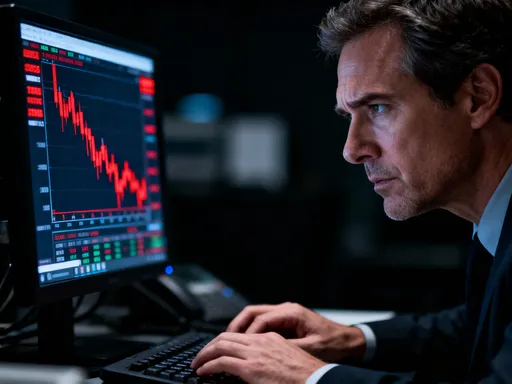
The turning point came during a quiet market correction that few saw coming. Stock valuations softened, bond yields fluctuated, and consumer confidence began to wane. At the same time, my car needed unexpected repairs, my health insurance deductible reset, and my partner’s hours at work were reduced. These weren’t catastrophic events on their own, but together, they drained my emergency fund within two months. I had saved diligently, but I hadn’t prepared for timing — the worst moments often arrive in clusters, not isolation. That’s when I realized my budget wasn’t proactive; it was reactive. It tracked the past, not the future.
The flaw in traditional personal budgeting is that it treats income and expenses as isolated variables, disconnected from the broader economic environment. In reality, personal finance is deeply intertwined with macroeconomic trends. Inflation impacts grocery bills. Interest rates affect mortgage payments and savings returns. Labor market conditions influence job security and overtime opportunities. When I ignored these forces, I was essentially navigating a storm without a compass. My budget wasn’t failing because I lacked willpower — it was failing because it lacked context. That moment of realization was painful, but it was also liberating. It meant the solution wasn’t more austerity — it was more awareness.
Why Budgeting Can’t Ignore Market Trends
A personal budget does not exist in a vacuum. It operates within a complex financial ecosystem shaped by interest rates, employment data, inflation, and consumer behavior. To treat budgeting as purely personal is to ignore the tides that lift or sink all boats. Consider this: if inflation rises, your grocery bill increases even if your shopping habits don’t change. If interest rates climb, your credit card debt becomes more expensive, and your savings account might finally earn meaningful interest. These aren’t abstract concepts — they are daily financial realities.
I began to see my budget not as a static spreadsheet, but as a living document influenced by external signals. For example, when the central bank raised interest rates, I didn’t just notice higher borrowing costs — I adjusted my saving strategy. Instead of keeping excess cash in a low-yield account, I moved a portion into high-yield savings vehicles that benefited from the rate hike. Similarly, when job reports showed weakening employment in certain sectors, I took it as a cue to tighten discretionary spending, even if my own job was secure. This wasn’t fear-driven — it was foresight-driven.
One of the most impactful realizations was how consumer sentiment affects spending behavior. When surveys show that people are feeling pessimistic about the economy, they tend to delay big purchases, reduce dining out, and prioritize essentials. This shift often precedes broader economic slowdowns. By monitoring these trends, I could adjust my own spending rhythm before feeling financial pressure. For instance, if I saw declining consumer confidence, I might postpone a planned home renovation or delay upgrading my phone. These weren’t drastic cuts — they were strategic pauses that preserved liquidity.
The key insight is this: you don’t need to predict the market to benefit from its signals. You only need to observe and respond. Just as a farmer watches weather patterns to decide when to plant, you can use economic indicators to decide when to spend, save, or invest. This doesn’t require a finance degree or expensive tools. It requires attention — the willingness to look beyond your bank statement and see the larger financial landscape.
Building a Forecast-Aware Budget Framework
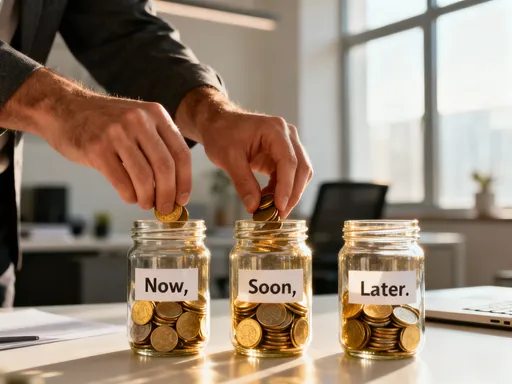
After my budget breakdown, I knew I needed a new structure — one that wasn’t rigid, but responsive. I redesigned my financial plan around three core layers: fixed essentials, flexible lifestyle spending, and a dynamic buffer. The first layer covers non-negotiable expenses like rent, utilities, insurance, and groceries. These are predictable and must be funded first. The second layer includes discretionary spending — dining out, entertainment, travel, and hobbies. This is where I have the most control and can adjust based on circumstances. The third and most important layer is the dynamic buffer — a flexible reserve that expands or contracts based on market conditions.
The dynamic buffer is the heart of my forecast-aware budget. Instead of maintaining a fixed emergency fund, I now adjust its size based on economic signals. During periods of high market volatility or rising unemployment, I increase my cash reserve from three to six months of expenses. I don’t do this out of fear — I do it because data suggests higher uncertainty. Conversely, during stable economic periods, I can safely reduce the buffer and allocate more toward long-term goals like retirement or home savings. This approach turns my emergency fund from a static number into a strategic tool.
I also introduced seasonal budget categories, such as “market watch mode” and “growth mode.” In market watch mode, triggered by negative economic indicators, I automatically reduce non-essential spending and pause new investments. I don’t eliminate these activities — I delay them. In growth mode, when conditions are favorable, I increase contributions to retirement accounts and consider modest upgrades in lifestyle, like a family vacation. These modes aren’t arbitrary — they’re tied to real data, making my budget adaptive rather than reactive.
Another critical change was separating short-term liquidity from long-term wealth building. I used to treat all savings the same, but now I categorize them by purpose and time horizon. Short-term reserves stay in accessible, low-risk accounts. Long-term investments remain in diversified portfolios, untouched by market noise. This separation prevents emotional decisions — I’m not tempted to sell stocks during a dip to cover a car repair because I have a dedicated fund for that. The framework doesn’t eliminate risk, but it contains it.
Tracking What Matters: Simple Signals That Work
You don’t need a financial terminal or a paid subscription to benefit from economic insights. I started with three free, reliable sources: government economic reports, central bank announcements, and major market index trends. The U.S. Bureau of Labor Statistics releases monthly employment and inflation data. The Federal Reserve publishes statements after each policy meeting. Major indices like the S&P 500 and bond yields are widely reported in financial news. These are public, verifiable, and updated regularly — perfect for informed decision-making.
I set up email alerts for key data releases so I wouldn’t miss important updates. Every month, I spend about 15 minutes reviewing the latest employment report, inflation numbers, and central bank commentary. I don’t analyze every detail — I focus on trends. For example, if inflation has risen for three consecutive months, especially in food or energy, I know to expect higher grocery and utility bills. I adjust my budget accordingly, shifting funds from discretionary categories to essentials. This isn’t speculation — it’s preparation.
One of the most useful patterns I’ve observed is the lag between commodity prices and consumer costs. When oil prices rise, gas prices follow within weeks. When wheat or corn prices increase, bread and cereal prices go up shortly after. By monitoring commodity indexes, I can anticipate grocery inflation before it hits my receipt. I respond by buying in bulk when prices are stable or switching to store brands during spikes. These small actions add up over time, preserving hundreds of dollars annually.
I also pay attention to housing market trends, not because I’m buying or selling, but because they reflect broader economic health. Rising home prices and low inventory often signal strong consumer confidence and tight labor markets. Falling prices and high inventory can indicate weakening demand. These shifts influence everything from credit availability to consumer spending. When the housing market slows, I know it’s wise to be more conservative with debt and larger purchases. Again, I’m not predicting a crash — I’m adjusting my behavior to match the environment.
Risk Control: Protecting Gains Without Panic
One of the biggest dangers in personal finance is emotional decision-making. Market headlines can trigger fear — a sudden drop in stocks, a spike in inflation, or news of corporate layoffs. Without a clear strategy, it’s easy to react impulsively: sell investments at a loss, hoard cash, or cut spending so drastically that quality of life suffers. I’ve made these mistakes. What I’ve learned is that risk control isn’t about avoiding risk — it’s about managing it with discipline.
To prevent knee-jerk reactions, I established threshold rules for adjusting my budget. I don’t change my financial plan based on a single data point. Instead, I require confirmation from at least two indicators before making a shift. For example, if inflation rises but employment remains strong and interest rates are stable, I view it as a temporary spike, not a structural change. I might adjust my grocery budget, but I won’t overhaul my entire plan. But if inflation is rising, job growth is slowing, and the central bank signals more rate hikes, that’s a stronger signal — and I respond with more significant adjustments.
This rule-based approach removes emotion from decision-making. It’s similar to how professional investors use stop-loss orders — not to predict, but to protect. I apply the same logic to spending and saving. If two or more indicators suggest economic stress, I activate my market watch mode: I reduce discretionary spending, pause non-essential investments, and increase my cash buffer. If conditions improve, I revert to growth mode. This system keeps me aligned with reality, not headlines.
Another key part of risk control is income diversification. I used to rely solely on my primary job, which made me vulnerable to layoffs or industry downturns. Now, I have multiple income streams — freelance work, a small online business, and dividend-paying investments. These aren’t meant to replace my main income, but to act as shock absorbers. During uncertain times, even a modest side income can cover essential bills and reduce financial stress. More importantly, it gives me psychological resilience — I know I’m not entirely dependent on one source.
Practical Tools That Turn Insight into Action
Knowledge is only powerful when it leads to action. I turned my insights into a practical system using tools I already had. Spreadsheets became my command center. I built a simple dashboard that tracks my monthly income, expenses, savings rate, and a “market pulse” score. The pulse score is a weighted index based on recent economic data — employment, inflation, interest rates, and consumer confidence. Each indicator is scored from 1 to 5, and the average gives me a snapshot of current conditions.
The dashboard uses color-coded alerts: green for stable conditions, yellow for caution, and red for action required. When the score shifts from green to yellow, I review my discretionary spending. When it hits red, I activate my full market watch protocol. This visual system makes decision-making faster and more objective. I don’t need to remember every data point — the dashboard highlights what matters.
I also use personal finance apps to sync my bank accounts, track spending, and set alerts for unusual activity. These tools help me stay aware of my cash flow in real time. But I don’t rely on automation alone. Every Sunday, I conduct a 30-minute financial review. I check my account balances, review last week’s transactions, and read the latest economic news. This routine keeps me connected to both my personal finances and the broader economy. It’s not time-consuming, but it’s consistent — and consistency is where financial discipline grows.
Another useful tool is calendar-based planning. I schedule budget reviews around key economic releases. For example, the first Friday of each month is jobs report day — I use that morning to update my forecast and adjust my spending plan if needed. The day after a Federal Reserve meeting, I review interest rate implications for my savings and debt. By aligning my personal rhythm with economic cycles, I stay ahead of changes rather than chasing them.
Long-Term Gains: How Forecasting Changed My Financial Mindset
This approach hasn’t made me rich overnight, but it has made me financially resilient. I no longer dread economic news — I use it. My savings have grown more steadily, not because I earn more, but because I waste less during downturns. I’ve avoided high-interest debt by timing large purchases during stable periods. I’ve preserved investment gains by resisting the urge to sell during volatility. Most importantly, I’ve gained confidence. Budgeting is no longer a chore — it’s a strategy.
The biggest shift has been in my mindset. I used to see money as a series of isolated transactions: income in, expenses out. Now, I see it as part of a dynamic system — one that responds to global events, policy changes, and market forces. I don’t control the economy, but I can adapt to it. This doesn’t require perfection — it requires awareness, preparation, and small, consistent actions.
Today, I view my budget as a living strategy, not a static plan. It evolves with the world around me. When uncertainty rises, I tighten. When stability returns, I grow. I’ve taught my family this approach, helping them understand why we delay vacations or upgrade phones only when conditions are right. It’s not about deprivation — it’s about timing and wisdom.
Financial peace isn’t found in having the most money — it’s found in having the most control. By aligning my budget with real economic signals, I’ve stopped guessing and started preparing. I don’t know what the future holds, but I know I’m ready. And that makes all the difference.